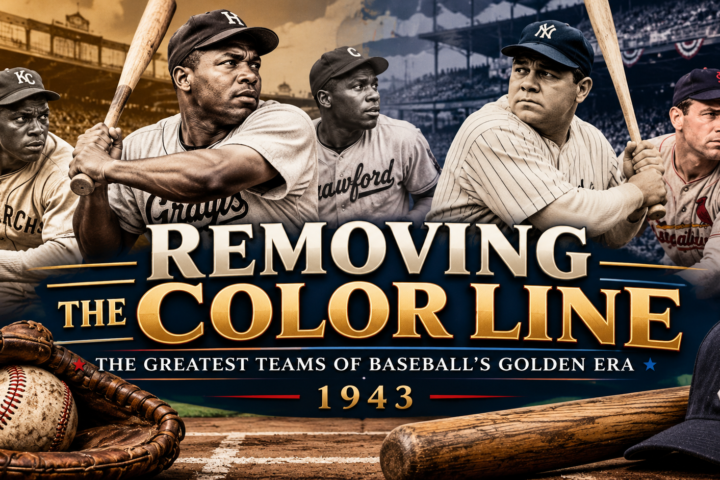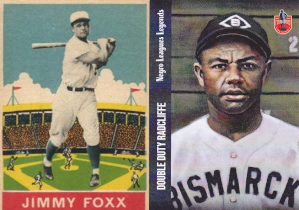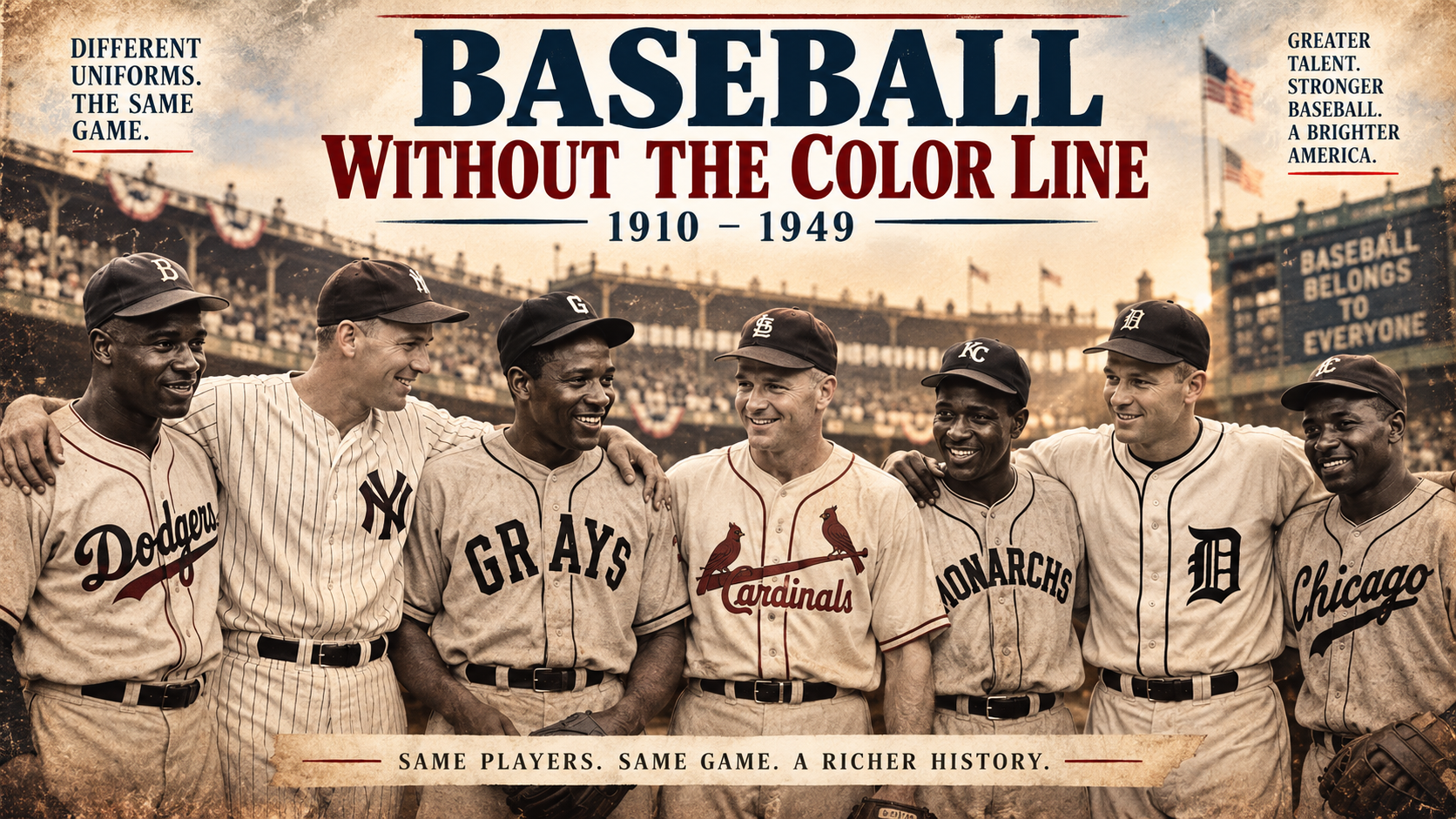
What would Major League Baseball have looked like without the color line? This project uses historical Negro League statistics and DKSports PC Baseball to explore nearly 40 years of integrated Major League Baseball.”
Preface
The first thing I did was provide ChatGPT with several Excel spreadsheets containing historical baseball data from the Lahman database, a widely used source of baseball statistics. I also used data from sites such as Baseball-Reference and Seamheads to help verify players, teams, seasons and statistics.
Next, I added a Quality of Play (QOP) spreadsheet created by Eric Chalek. This was an important part of the project because statistics from different leagues cannot simply be treated as though they were produced against identical levels of competition. The QOP ratings provide a way to compare the quality of different leagues and seasons.
For example, while working with the 1919 season, the American League has a QOP rating of 1.00 and the National League 0.98, while the Eastern and Western Black Independent circuits are rated 0.90 and 0.87 respectively. These ratings helped provide a basis for translating Negro League performance into a Major League environment rather than simply extrapolating the original statistics over a longer schedule.
ChatGPT also checked multiple historical baseball websites when necessary to verify findings, resolve questions about players and teams, and supplement the statistical data.
The final spreadsheet I provided was the player-import template from Dave Koch Sports' PC Baseball. It contains the 145 fields needed to create players for the game, including batting, pitching, fielding, positions and special ratings.
With those pieces in place, the goal was not to make the Negro League stars as good as their reputations suggested they should be. Instead, the goal was to start with what each player actually did in each individual season, account for the quality of competition and playing opportunity, translate that performance into the Major League environment of that particular year, and then let the PC Baseball simulation tell us what happened.
The Process
I asked ChatGPT to create Major League Equivalents (MLEs) for Negro League players one season at a time, beginning with 1920, the first season of the Negro National League. Rather than creating ratings based simply on a player's reputation or career accomplishments, each season was treated independently.
ChatGPT processed the statistical data I provided, applied the Quality of Play information, compared the Negro League performance with the Major League environment for that particular season, and used additional web research when necessary. It then populated the 145 fields in the Dave Koch Sports PC Baseball import spreadsheet, including batting, pitching, fielding, positions and other game ratings.
After reviewing the completed file, I imported the Negro League players into the corresponding Major League season as free agents.
I then conducted a draft to distribute the Negro League players among the existing Major League teams. The draft order was based on the previous season's standings, with the team having the fewest wins selecting first and the best team selecting last.
For example, when setting up the 1919 season, the draft began with teams such as the Athletics, Phillies, Cardinals and Nationals based on their previous-season records.
I did not simply assign the best available player with every selection. I looked at each Major League team's roster and determined its needs. A team needing a shortstop might select a Negro League shortstop, while another club might need a starting pitcher, catcher or outfielder. I then conducted the draft accordingly.
This created an alternate version of Major League Baseball in which Negro League players were distributed throughout the existing clubs rather than forming separate teams. More importantly, once the players were drafted, I did not control how well they performed. They competed alongside the Major League players in the PC Baseball simulation under the same game environment.
Replay Examples
1928: Building an Integrated Major League Season
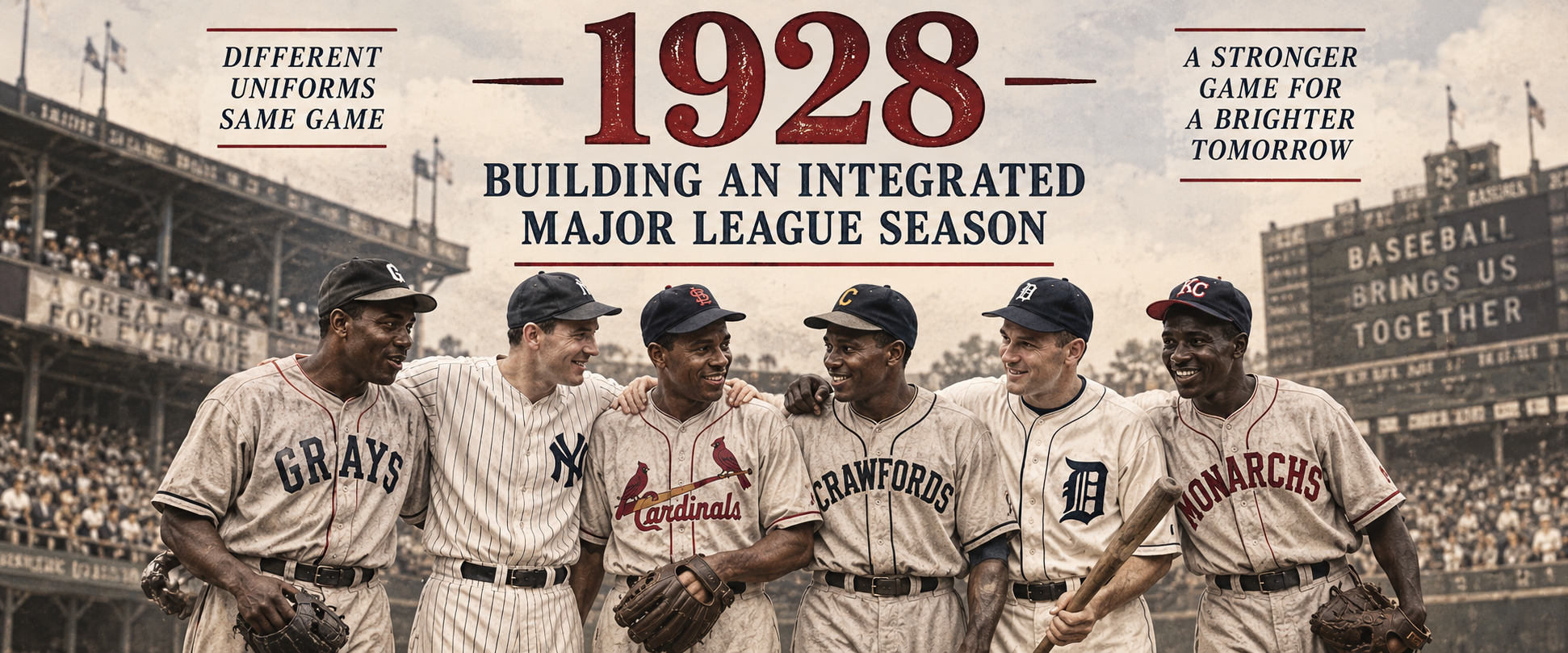
The 1928 season provides a good example of how the project worked in practice.
A total of 163 Negro League players entered the Major League player pool and were drafted by 12 Major League clubs, with the weakest teams selecting first. Clubs drafted according to their roster needs rather than simply taking players in order of reputation.
The First Two Rounds
Round 1: Philadelphia — Rap Dixon, CF; Boston —
Oscar Charleston, CF; Boston Braves — Willie Wells, SS; Cleveland — Jud Wilson, 3B; Detroit — Ted Trent, P; Brooklyn — Turkey Stearnes, CF; Chicago White Sox — Laymon Yokely, P; Cincinnati — Wilson Redus, LF; Washington — Luther Farrell, P; Pittsburgh — Mule Suttles, 1B; St. Louis Browns — Dewey Creacy, 3B; Chicago Cubs — Judy Johnson, 3B.
Round 2: Philadelphia — William Bell, P; Boston
— Pythias Russ, SS; Boston Braves — Willie Foster, P; Cleveland — George Giles, 1B; Detroit — Satchel Paige, P; Brooklyn — Cool Papa Bell, CF; Chicago White Sox — Dick Lundy, SS; Cincinnati — Walter Cannady, 1B; Washington — Biz Mackey, C; Pittsburgh — Bullet Rogan, RF/P; St. Louis Browns — Willie Powell, P; Chicago Cubs — Newt Allen, SS.
How the Rosters Changed
Boston: Pitchers Ed Harney and Harry Salmon
joined Red Ruffing, Jack Russell and Ed Morris in the rotation. W. Jones and Bill Johnson shared catching duties with Charlie Berry. Ben Taylor split time at first base with Phil Todt, while Bill Regan remained at second and Buddy Myer at third. Pythias Russ and John Beckwith took some of Billy Rogell's playing time at shortstop. Ken Williams remained in left field, but Oscar Charleston displaced Ira Flagstead in center. Chaney White shared right field with Doug Taitt.
Cleveland: Jack Marshall and Chet Brewer joined
Joe Shaute, George Uhle and Jake Miller on the pitching staff. Clarence Palm joined Luke Sewell behind the plate. George Giles competed with Ed Morgan and George McAllister at first base. Carl Lind remained at second. Jud Wilson moved ahead of Johnny Hodapp at third, while Joe Sewell remained the starting shortstop with Ángel Alfonso in reserve. Charlie Jamieson stayed in left, Fats Jenkins took over center, and Steel Arm Davis shared right field with Homer Summa.
Detroit: Ted Trent, Carl Glass and Satchel Paige
joined Ownie Carroll and Earl Whitehill on the pitching staff. Pinky Hargrave shared catching duties with John Hines. George Carr received most of the work at first ahead of Bill Sweeney. Charlie Gehringer remained at second, Marty McManus at third and Jackie Tavener at short. Paul Easterling shared left field with Branch Russell, while Vic Harris and Chuffie Alexander competed with Harry Rice in center. Harry Heilmann remained in right.
Chicago White Sox: Dick Lundy took over at
shortstop ahead of Bill Cissell.
Washington: Luther Farrell joined the pitching
staff. Biz Mackey became the primary catcher ahead of Muddy Ruel, while George Scales moved ahead of Bucky Harris at second base. Alejandro Oms shared center field with Sam West.
St. Louis Browns: Henry Williams shared catching
duties with Wally Schang. Dewey Creacy took over third base from Frank O'Rourke, while Martín Dihigo became a valuable utility player capable of filling several positions.
Philadelphia: William Bell and Eggie Hensley
joined the pitching staff. Larry Brown joined Johnny Schulte behind the plate. Rap Dixon and Cristóbal Torriente strengthened the outfield, with Torriente also providing pitching depth.
Boston Braves: Willie Foster and Red Ryan joined
the pitching staff. José María Fernández was added to the catching rotation. Willie Wells became the starting shortstop, Heavy Johnson took over in left, and Pete Washington and Cando López shared center-field duties with Jack Smith.
Brooklyn: Turkey Stearnes displaced Max Carey as
the starting center fielder.
Cincinnati: Walter Cannady took over first base
from High Pockets Kelly, while Wilson Redus replaced Billy Zitzmann in left field.
Pittsburgh: Darltie Cooper, Cliff Bell and Bullet
Rogan joined the pitching staff. Mule Suttles, Rogan and Otto Briggs also became important parts of the Pirates' starting lineup.
End-of-Season Results
The results were encouraging because Negro League players appeared throughout the Major League leaderboards without overwhelming them.
Dewey Creacy, Rap Dixon and Mule Suttles finished among the top ten in batting average. Turkey Stearnes hit 24 home runs, tying Al Simmons for third, while Suttles hit 22, the same total as Rogers Hornsby.
Willie Wells drove in 100 runs, matching Jimmie Foxx; the two finished seventh and eighth on the RBI leaderboard.
Negro League players also made an impact on the bases. George Scales stole 25 bases, Jud Wilson 24 and Rap Dixon 23, placing them sixth, seventh and eighth among the league leaders.
The pitching results showed a similar mixture. Juanelo Mirabal, Andy Cooper and Darltie Cooper finished among the top ten in ERA and also among the top ten in victories. Luther Farrell, Willie Powell, Laymon Yokely and Willie Foster finished among the top ten in strikeouts.
The impact extended beyond individual statistics. Pittsburgh, Washington, the Chicago Cubs, St. Louis Browns, Chicago White Sox and Boston Braves all finished near the top of their respective leagues.
What Did 1928 Show?
For me, the most interesting part of the 1928 replay was not that Negro League players appeared on the leaderboards. It was where they appeared and who appeared beside them.
Turkey Stearnes tied Al Simmons in home runs. Mule Suttles tied Rogers Hornsby. Willie Wells matched Jimmie Foxx in RBI. Negro League pitchers appeared among Major League pitchers in ERA, victories and strikeouts. At the same time, the Negro League players did not take over every leaderboard or displace every established Major League star.
The same thing happened at the team level. Some Negro League stars immediately became starters. Others shared positions with established Major Leaguers, while still others became useful reserves or strengthened pitching staffs. Players such as Charlie Gehringer, Harry Heilmann and Joe Sewell retained their positions because their teams already had outstanding Major League players at those spots.
This was the type of result I was hoping the project would produce. I was not trying to prove that every Negro League player would have become a Major League star. I wanted to find out what might have happened if these players had been given the opportunity to compete for Major League jobs based on their ability.
1919: An Earlier Look
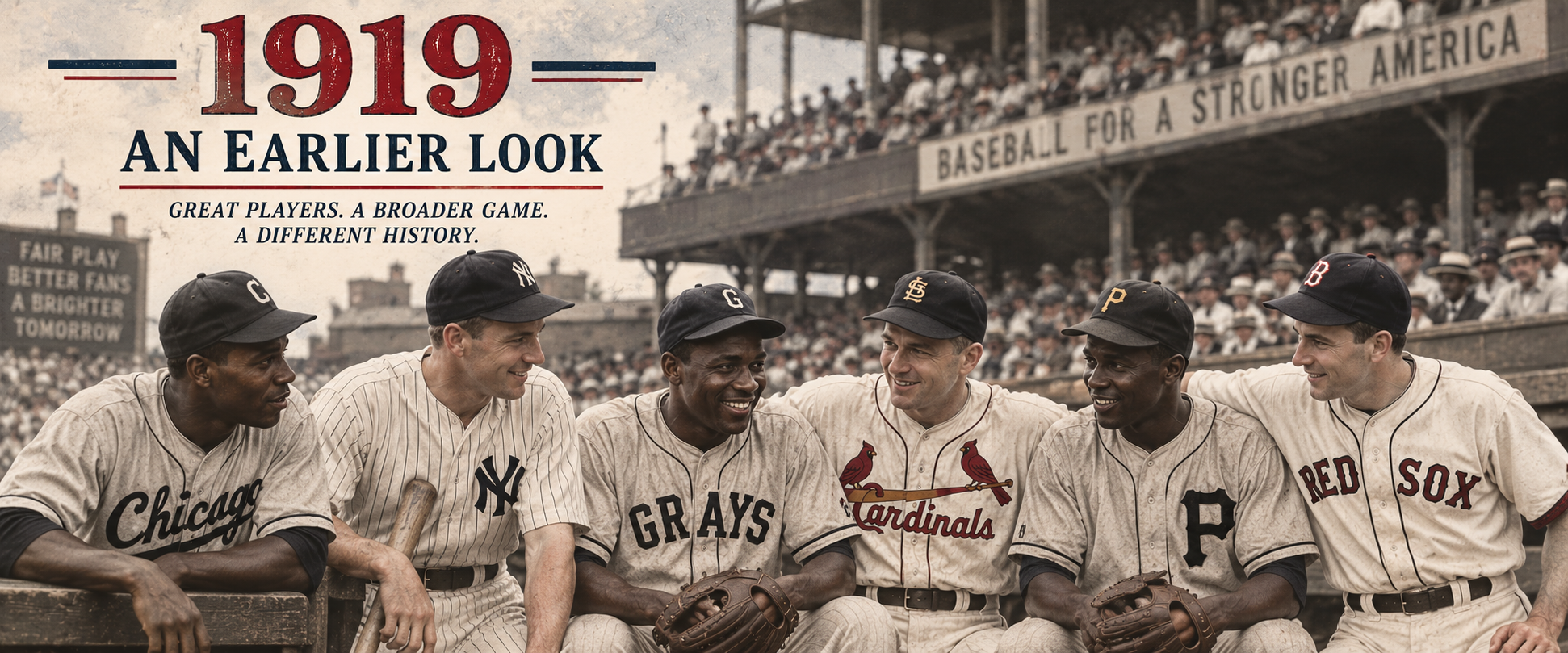
The 1919 season provides an interesting look at integration before the Negro National League was organized. The Philadelphia Athletics had the first selection in the draft and chose pitcher “Smokey” Joe Williams. Williams finished with a 4.49 ERA and was among the league leaders in victories, but even his addition wasn't enough to rescue the Athletics, who still finished eighth in the American League. Philadelphia also added third baseman Recurvon Terán, who hit .267 with four home runs, and outfielder Blainey Hall, who batted .368 in 78 games. The Phillies selected “Cannonball” Dick Redding second overall. Redding went 18–12 with a 2.95 ERA, while Cuban pitcher Juan Padrón finished 12–11 with a 4.37 ERA. Together, they helped lift the Phillies out of the National League basement.
The Cardinals used the third selection on Oscar Charleston, and he responded by winning the batting title at .344. George Sisler finished second among the Major Leaguers, while Pete Hill hit .339 and finished second to Babe Ruth in home runs, 22 to 21. Hill was named the season's Most Valuable Player. Yet Negro League hitters did not overwhelm the leaderboard: beyond Charleston and Hill, only Edgar Wesley of Pittsburgh and John Henry Lloyd of Washington appeared among the leading hitters.
The pitching results produced a similar mixture. Eddie Cicotte of the infamous 1919 Chicago White Sox posted the league's lowest ERA at 1.76, while Pittsburgh's Babe Adams was named the pitching MVP after winning 24 games. Negro League stars Dick Redding won 18, and Joe Williams also finished among the top ten in victories. Williams led the Major Leagues in strikeouts with 163, narrowly ahead of Grover Cleveland Alexander's 161. Babe Ruth, still pitching for the Boston Red Sox, finished 15–10 with a 3.10 ERA.
The 1919 results are a good example of what occurred throughout these replays. Some Negro League stars performed at an elite Major League level—Charleston won a batting title, Hill became MVP, Williams led the league in strikeouts and Redding became a frontline starter. Others became solid Major Leaguers, and some had only modest impacts. Meanwhile, stars such as Ruth, Sisler, Cicotte, Adams and Alexander continued to rank among baseball's best. The result was not one league replacing another at the top of the sport, but a deeper Major League talent pool in which the best Black and white players competed alongside one another.
1937: Gibson, Brown, Leonard and Smith
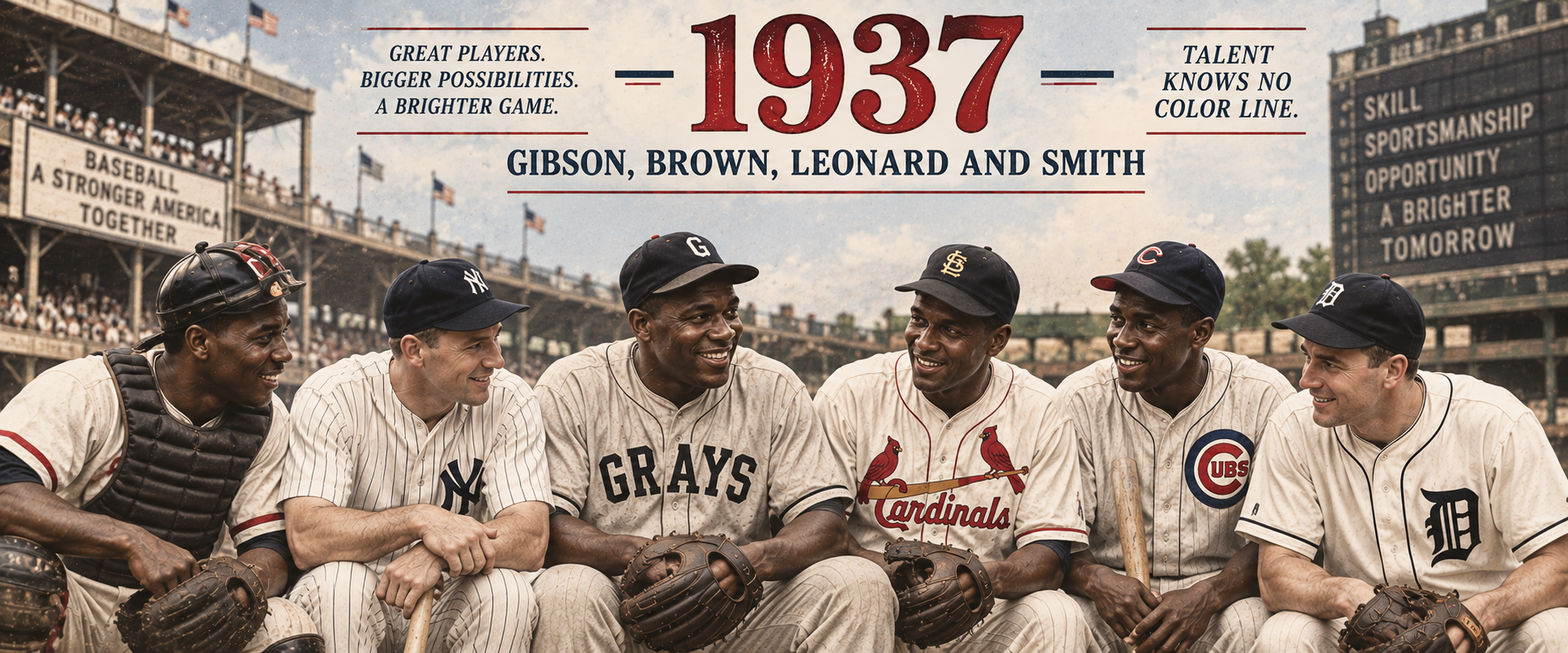
By 1937, the project was 27 seasons into its alternate baseball history. That year's draft included Josh Gibson in what would become one of his greatest replay seasons. The St. Louis Browns selected Gibson first overall. Willard Brown went second to Cincinnati, followed by Newt Allen to the Athletics and Buck Leonard fourth overall to Philadelphia. Wild Bill Wright went to Brooklyn. Pitchers Ray Brown and Hilton Smith were selected by Washington and Boston, followed later by Jerry Benjamin and Vic Harris.
Gibson took over as the Browns' starting catcher and had a spectacular season. He finished second to Joe DiMaggio in MVP voting, batting .357 compared with DiMaggio's .381. Gibson hit 58 home runs to DiMaggio's 51 and finished third with 138 RBI, behind DiMaggio's 162 and Joe Medwick's 157.
Other Negro League players also made significant contributions. Willard Brown started in the Cincinnati outfield before eventually sharing time with Chick Hafey. Newt Allen became the Athletics' starting second baseman and hit .318, fourth in the league. Buck Leonard played 94 games and batted .340 with 31 home runs and 104 RBI. Wild Bill Wright shared time with Heinie Manush in Brooklyn and hit .312 with 17 home runs.
On the mound, Hilton Smith went 17–6 with a 2.03 ERA for the Boston Bees and helped the club finish fourth in the National League. Ray Brown went 16–7 with a 2.21 ERA for Washington. Vic Harris appeared in 94 games for Cleveland and batted .293.
The 1937 season again produced the pattern seen throughout the project: a few Negro League players became stars, others became productive regulars, and still others shared jobs with established Major Leaguers.
How Did the Hitters Compare?
Oscar Charleston: How Does He Compare to Cobb and Speaker?
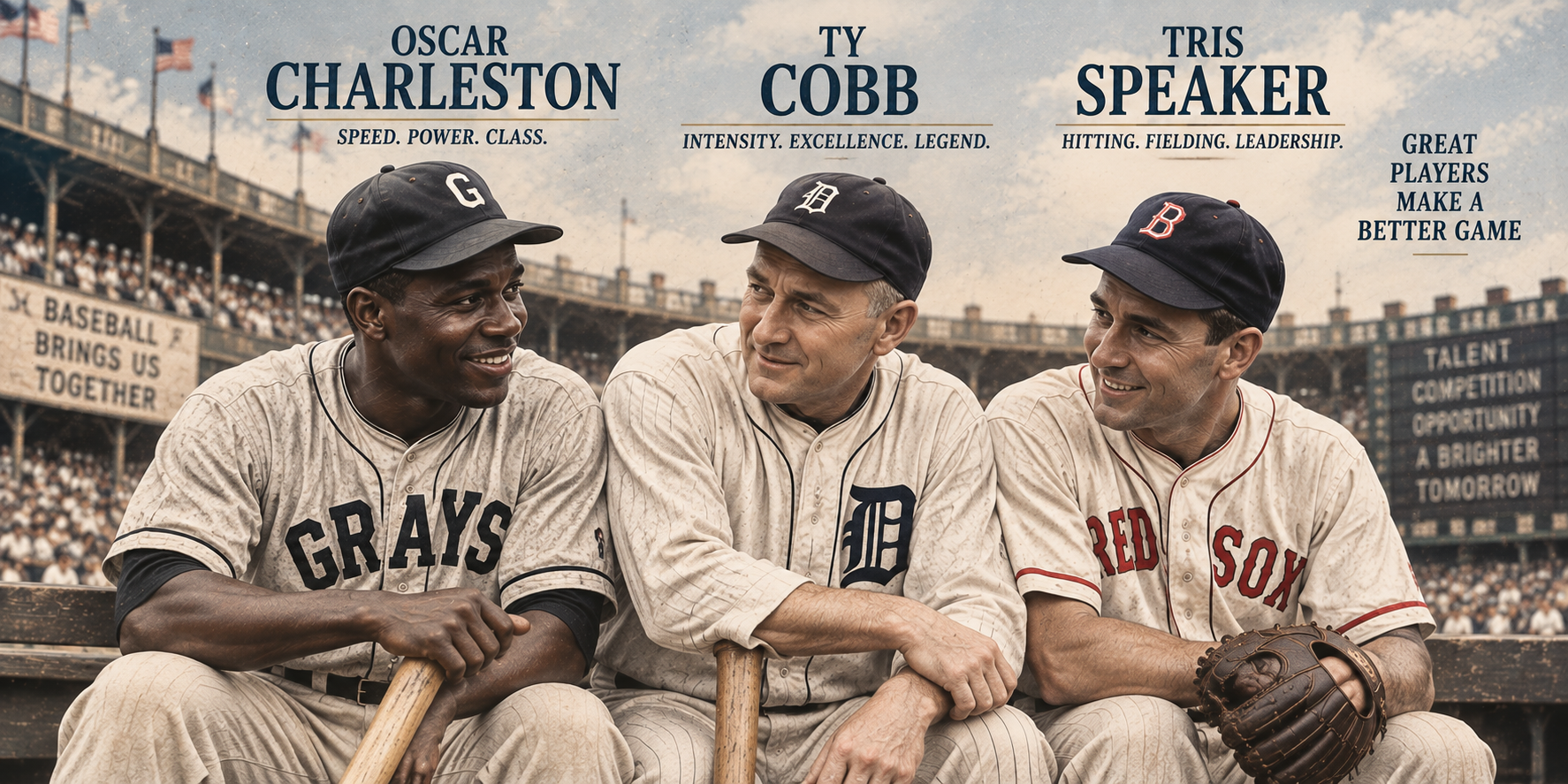
Here are their career batting lines: batting average, on-base percentage, slugging percentage and OPS.
| Player | BA | OBP | SLG | OPS |
|---|---|---|---|---|
| Oscar Charleston | .315 | .399 | .479 | .878 |
| Ty Cobb | .336 | .399 | .448 | .847 |
| Tris Speaker | .320 | .396 | .446 | .843 |
These are career records from the replay. The three players are remarkably close across these categories. Cobb led the league in batting five times—in 1910, 1911, 1913, 1916 and 1917—and in stolen bases four times, in 1910, 1915, 1916 and 1917. Charleston led the league in batting twice, in 1919 and 1925, and in stolen bases once, in 1921. Speaker won the batting title in 1912.
The comparison suggests that Charleston belonged in the same offensive company as Cobb and Speaker. He did not match Cobb's batting average, but he showed more power in the replay, finishing ahead of both in slugging percentage and OPS.
Buck Leonard and Heavy Johnson Compared with Rogers Hornsby
| Player | BA | OBP | SLG | OPS |
|---|---|---|---|---|
| Buck Leonard | .337 | .414 | .543 | .967 |
| Rogers Hornsby | .334 | .419 | .541 | .960 |
| Heavy Johnson | .357 | .423 | .528 | .951 |
These career numbers show just how well Buck Leonard performed in the replay. His batting line is strikingly close to Rogers Hornsby's. That is impressive company for any hitter. Heavy Johnson played only seven seasons in the replay, but he was extremely productive during that shorter career.
The National Baseball Hall of Fame has described Hornsby as one of the greatest right-handed hitters in baseball history. Heavy Johnson's career is also worth exploring through the SABR BioProject.
Josh Gibson Compared with Ruth, Gehrig and Foxx
| Player | HR | AB/HR | OBP | SLG | OPS |
|---|---|---|---|---|---|
| Josh Gibson | 552 | 14.55 | .408 | .616 | 1.024 |
| Babe Ruth | 685 | 13.15 | .417 | .602 | 1.019 |
| Jimmie Foxx | 480 | 16.37 | .392 | .559 | .951 |
| Lou Gehrig | 484 | 15.96 | .402 | .580 | .982 |
Gibson lines up extremely well with some of the greatest power hitters of his time. These are career records from the replay, and simply being in this group is high praise. His 552 home runs placed him behind Ruth but ahead of Gehrig and Foxx, while his slugging percentage and OPS were at the top of this group. I think the replays portrayed Gibson very well.
Great Shortstops: Willie Wells, John Henry Lloyd and John Beckwith
For an offensive comparison, I matched Wells, Lloyd and Beckwith with Honus Wagner and Arky Vaughan.
| Player | BA | OBP | SLG | OPS |
|---|---|---|---|---|
| John Henry Lloyd | .299 | .355 | .384 | .739 |
| Honus Wagner | .292 | .368 | .404 | .771 |
| Willie Wells | .306 | .384 | .480 | .864 |
| John Beckwith | .323 | .379 | .532 | .912 |
| Arky Vaughan | .296 | .386 | .412 | .798 |
This comparison looks only at offensive production; all of these players also had strong defensive reputations. It is not a perfect career comparison because the replay began in 1910, so only Wagner's final eight seasons are included. Lloyd, meanwhile, played 21 seasons in the replay and accumulated 2,560 hits. Wells and Beckwith were clearly the most powerful hitters in this group.
Who Were the Forgotten Stars?
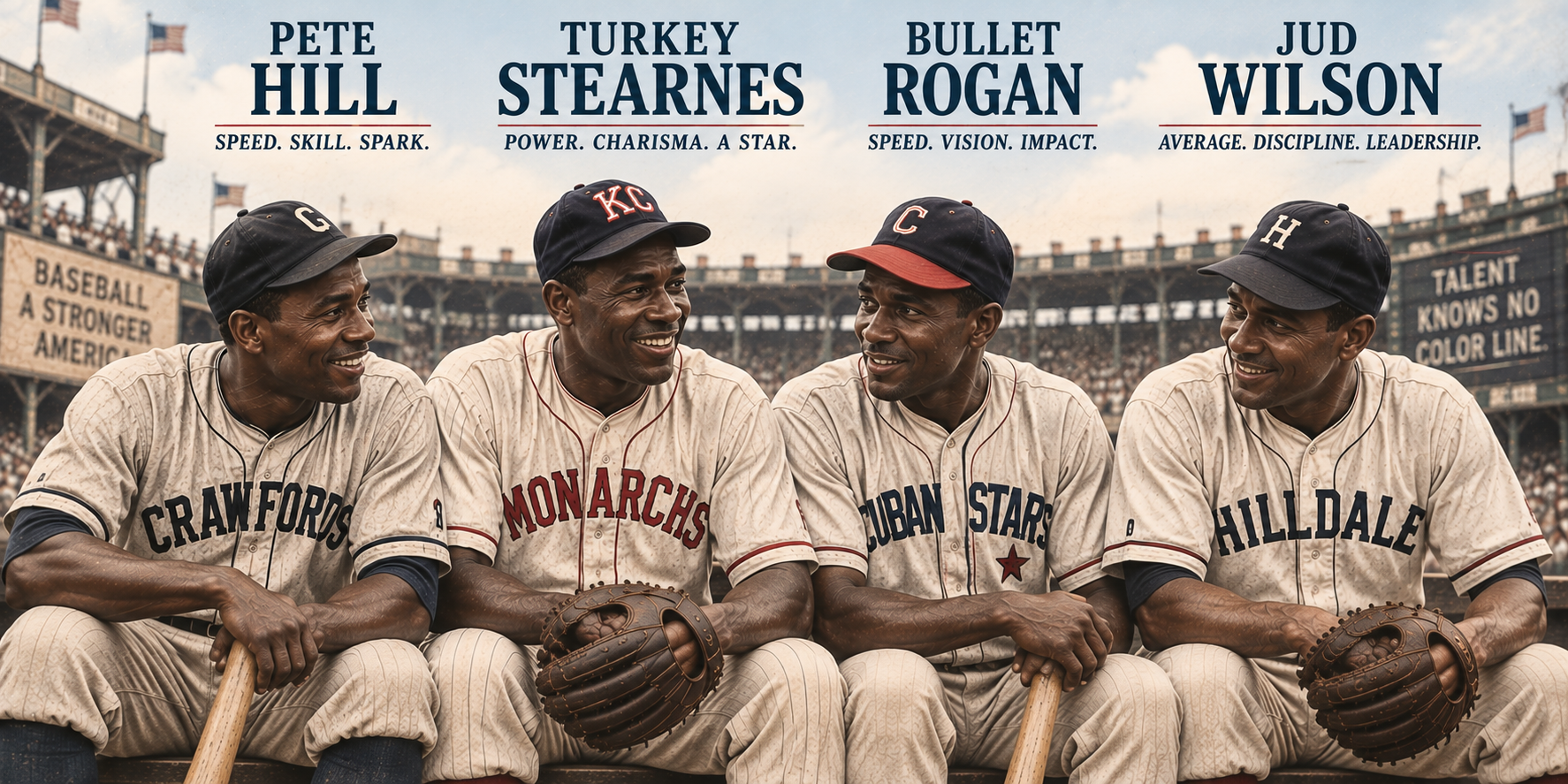
Pete Hill Compared with Paul Waner
| Player | BA | OBP | SLG | OPS |
|---|---|---|---|---|
| Pete Hill | .305 | .387 | .413 | .801 |
| Paul Waner | .308 | .383 | .432 | .814 |
This is another close career comparison. Hill's replay numbers fit comfortably beside those of Hall of Famer Paul Waner, giving us another example of a Negro League star whose name may not be as familiar to many baseball fans as his performance deserves.
Turkey Stearnes and Bullet Rogan Compared with Harry Heilmann and Al Simmons
| Player | BA | OBP | SLG | OPS |
|---|---|---|---|---|
| Turkey Stearnes | .293 | .370 | .486 | .856 |
| Harry Heilmann | .321 | .380 | .474 | .854 |
| Bullet Rogan* | .303 | .377 | .465 | .843 |
| Al Simmons | .321 | .360 | .513 | .873 |
Stearnes did not match Heilmann or Simmons in batting average, but his other offensive numbers were right there with them. Rogan was a true two-way player. When he was not pitching, he hit well enough to bat in the middle of the order. His pitching performance is included below.
Jud Wilson Compared with Bill Terry
| Player | BA | OBP | SLG | OPS |
|---|---|---|---|---|
| Jud Wilson | .309 | .379 | .440 | .819 |
| Bill Terry | .305 | .360 | .441 | .801 |
These two first basemen produced remarkably similar career offensive lines in the replay. Wilson held a slight edge in batting average, on-base percentage and OPS, while their slugging percentages were almost identical.
How Did the Negro League Pitchers Compare?
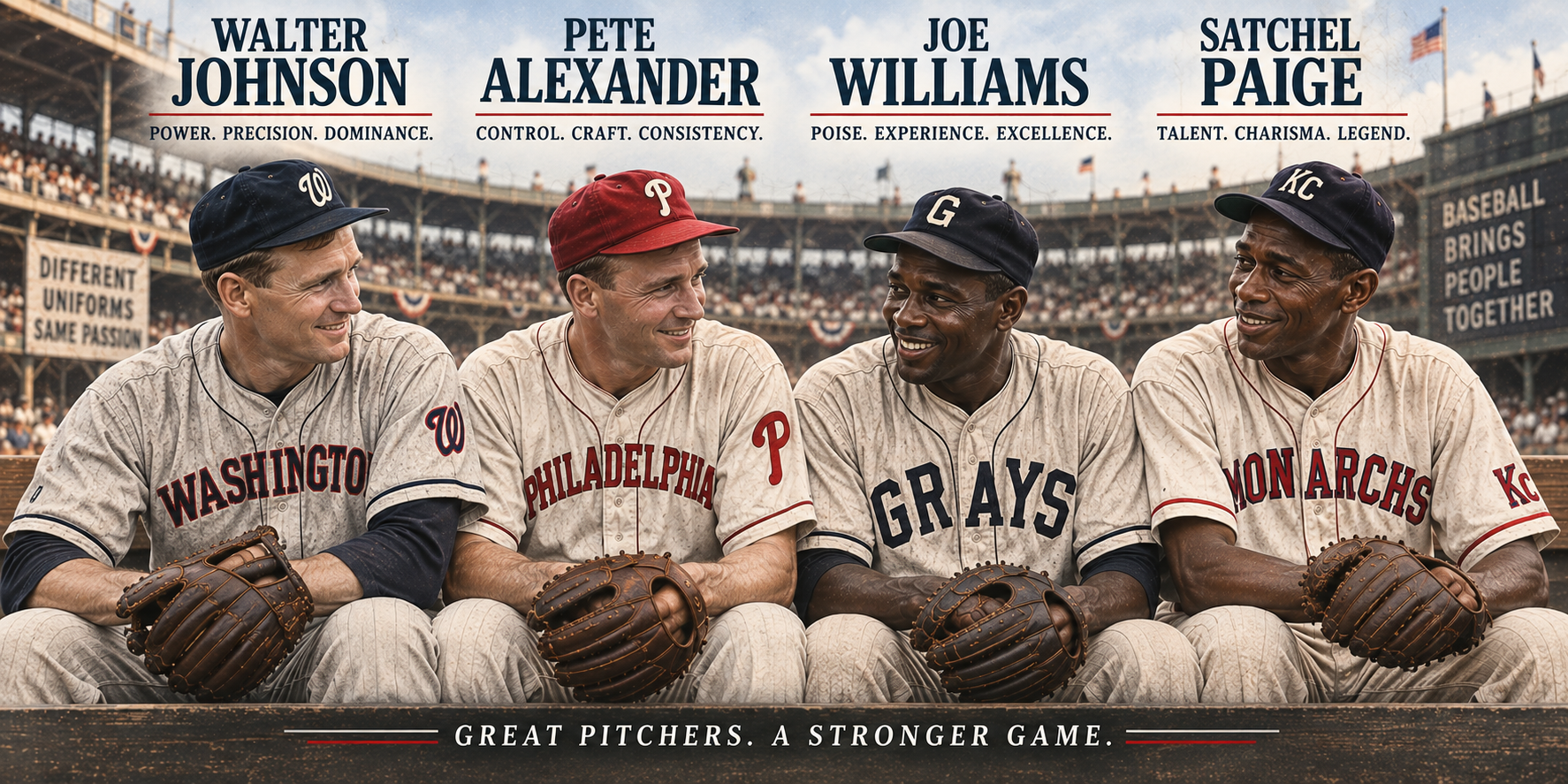
The following groups compare leading pitchers from the replay by winning percentage, WHIP, strikeouts per nine innings, walks per nine innings, opponents' batting average and ERA.
First Group
| Pitcher | W% | WHIP | K/9 | BB/9 | AVG | ERA |
|---|---|---|---|---|---|---|
| Babe Ruth | .645 | 1.126 | 3.45 | 2.93 | .218 | 2.23 |
| Eddie Plank | .545 | 1.215 | 4.17 | 2.47 | .244 | 2.47 |
| Satchel Paige | .694 | 1.187 | 7.03 | 2.84 | .230 | 2.63 |
| Babe Adams | .608 | 1.122 | 3.61 | 1.49 | .247 | 2.72 |
| Walter Johnson | .596 | 1.144 | 5.49 | 2.13 | .240 | 2.73 |
| Joe Williams | .544 | 1.163 | 4.36 | 2.26 | .240 | 2.76 |
This group is arranged by ERA. Paige had the highest strikeout rate at 7.03 K/9, while Adams had the lowest walk rate at 1.49 BB/9. The important point is how naturally Paige and Williams fit among outstanding Major League pitchers in the same replay environment.
Second Group
| Pitcher | W% | WHIP | K/9 | BB/9 | AVG | ERA |
|---|---|---|---|---|---|---|
| Dick Redding | .550 | 1.278 | 3.94 | 3.07 | .246 | 2.86 |
| Ray Brown | .590 | 1.215 | 3.02 | 2.61 | .240 | 2.86 |
| Bob Feller | .575 | 1.211 | 6.73 | 3.96 | .209 | 2.89 |
| Bullet Rogan* | .548 | 1.325 | 3.82 | 3.02 | .257 | 3.08 |
| Chet Brewer | .584 | 1.263 | 3.30 | 3.24 | .238 | 3.20 |
This group is also arranged by ERA. Feller had the highest strikeout rate, while Ray Brown had the lowest walk rate among these five pitchers.
Third Group
| Pitcher | W% | WHIP | K/9 | BB/9 | AVG | ERA |
|---|---|---|---|---|---|---|
| Willie Foster | .612 | 1.329 | 4.29 | 3.89 | .237 | 3.24 |
| Lefty Grove | .575 | 1.289 | 4.63 | 2.55 | .257 | 3.36 |
| Wilbur Cooper | .542 | 1.321 | 3.05 | 2.64 | .262 | 3.36 |
| Pete Alexander | .516 | 1.277 | 4.03 | 2.04 | .266 | 3.42 |
| Dolf Luque | .516 | 1.361 | 3.26 | 3.16 | .261 | 3.62 |
| Dazzy Vance | .528 | 1.351 | 5.77 | 3.96 | .260 | 3.77 |
Vance had the highest strikeout rate in this group, while Alexander had the lowest walk rate.
A Broader Pitching Comparison
The same pitchers can also be viewed together to get a better sense of their overall place in the replay.
| Pitcher | W% | WHIP | K/9 | BB/9 | AVG | ERA |
|---|---|---|---|---|---|---|
| Walter Johnson | .596 | 1.144 | 5.49 | 2.13 | .240 | 2.73 |
| Pete Alexander | .516 | 1.277 | 4.03 | 2.04 | .266 | 3.42 |
| Babe Adams | .608 | 1.122 | 3.61 | 1.49 | .247 | 2.72 |
| Joe Williams | .544 | 1.163 | 4.36 | 2.26 | .240 | 2.76 |
| Lefty Grove | .575 | 1.289 | 4.63 | 2.55 | .257 | 3.36 |
| Eddie Plank | .545 | 1.215 | 4.17 | 2.47 | .244 | 2.47 |
| Satchel Paige | .694 | 1.187 | 7.03 | 2.84 | .230 | 2.63 |
| Ray Brown | .590 | 1.215 | 3.02 | 2.61 | .240 | 2.86 |
| Wilbur Cooper | .542 | 1.321 | 3.05 | 2.64 | .262 | 3.36 |
| Babe Ruth | .645 | 1.126 | 3.45 | 2.93 | .218 | 2.23 |
| Bullet Rogan* | .548 | 1.325 | 3.82 | 3.02 | .257 | 3.08 |
| Dick Redding | .550 | 1.278 | 3.94 | 3.07 | .246 | 2.86 |
| Bob Feller | .575 | 1.211 | 6.73 | 3.96 | .209 | 2.89 |
| Willie Foster | .612 | 1.329 | 4.29 | 3.89 | .237 | 3.24 |
| Dazzy Vance | .528 | 1.351 | 5.77 | 3.96 | .260 | 3.77 |
| Dolf Luque | .516 | 1.361 | 3.26 | 3.16 | .261 | 3.62 |
| Chet Brewer | .584 | 1.263 | 3.30 | 3.24 | .238 | 3.20 |
The Major League pitchers in this comparison include many of the outstanding pitchers of their ERAs. That makes the placement of the Negro League pitchers especially interesting. Joe Williams appears comfortably among the strongest pitchers in the group. Satchel Paige and Ray Brown also compare well with established Major League stars, while Bullet Rogan, Dick Redding, Willie Foster and Chet Brewer fit naturally within a deep group of accomplished pitchers.
These results should not be read as a literal all-time ranking. They show how these pitchers performed relative to one another inside the same DKSports replay environment.
What Did 40 Years of Integrated Baseball Look Like?
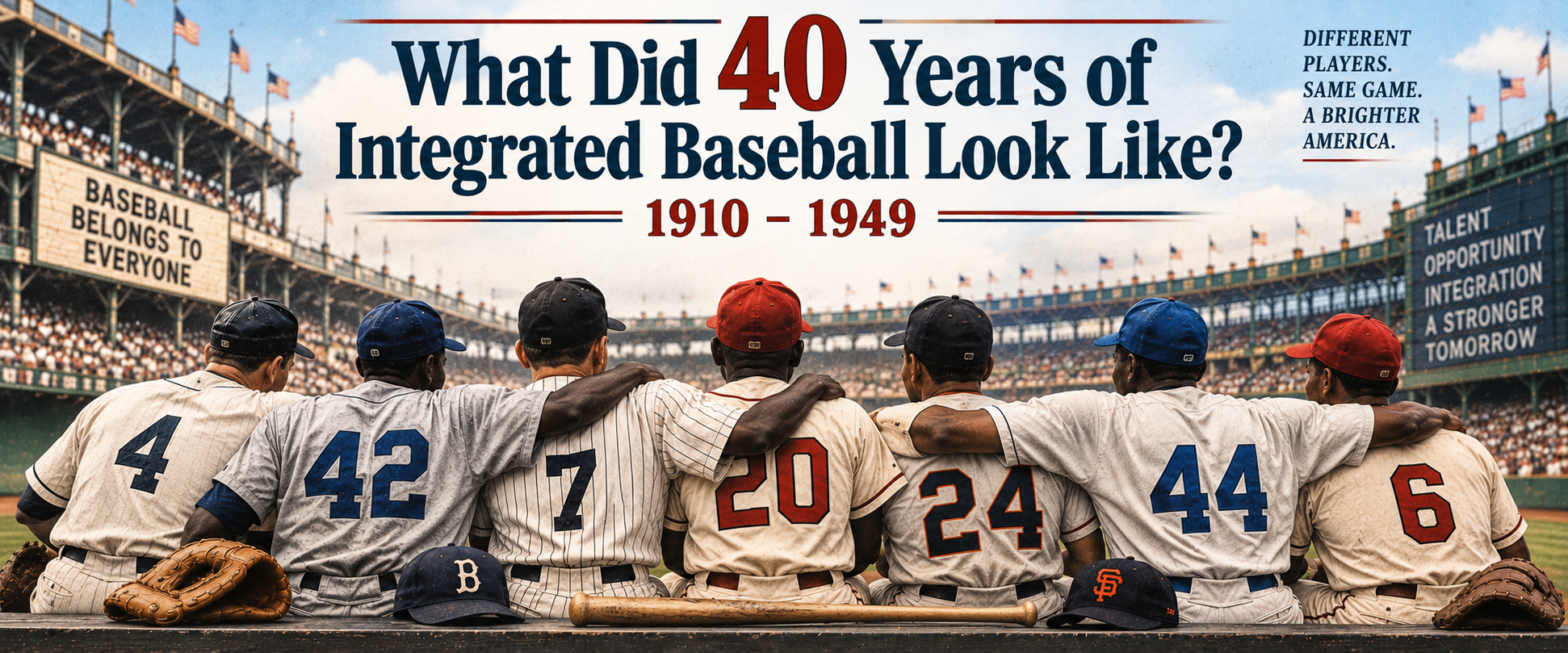
Across the full project, the leading Negro League players repeatedly showed that they could compete at a high Major League level. Some became stars and appeared alongside the best-known Major Leaguers of their ERAs. Others became everyday players, platoon players, utility men, backup catchers or members of Major League pitching staffs.
That may be one of the most useful results of the experiment. The Negro League players did not simply take over Major League Baseball, nor did they disappear into it. They spread naturally across the talent spectrum. A relatively small percentage became established stars or regulars at demanding positions such as pitcher, catcher, shortstop, center field and first base, while many others filled important supporting roles.
Their presence also changed teams, not just individual leaderboards. A club that drafted a starting pitcher, catcher or middle-of-the-order hitter could suddenly become deeper and more competitive. Over 40 seasons, integration affected batting races, pitching races, starting lineups, roster depth and pennant races. The result was a version of Major League Baseball with a larger and more complete pool of the ERA's best available talent.
What Might Have Been
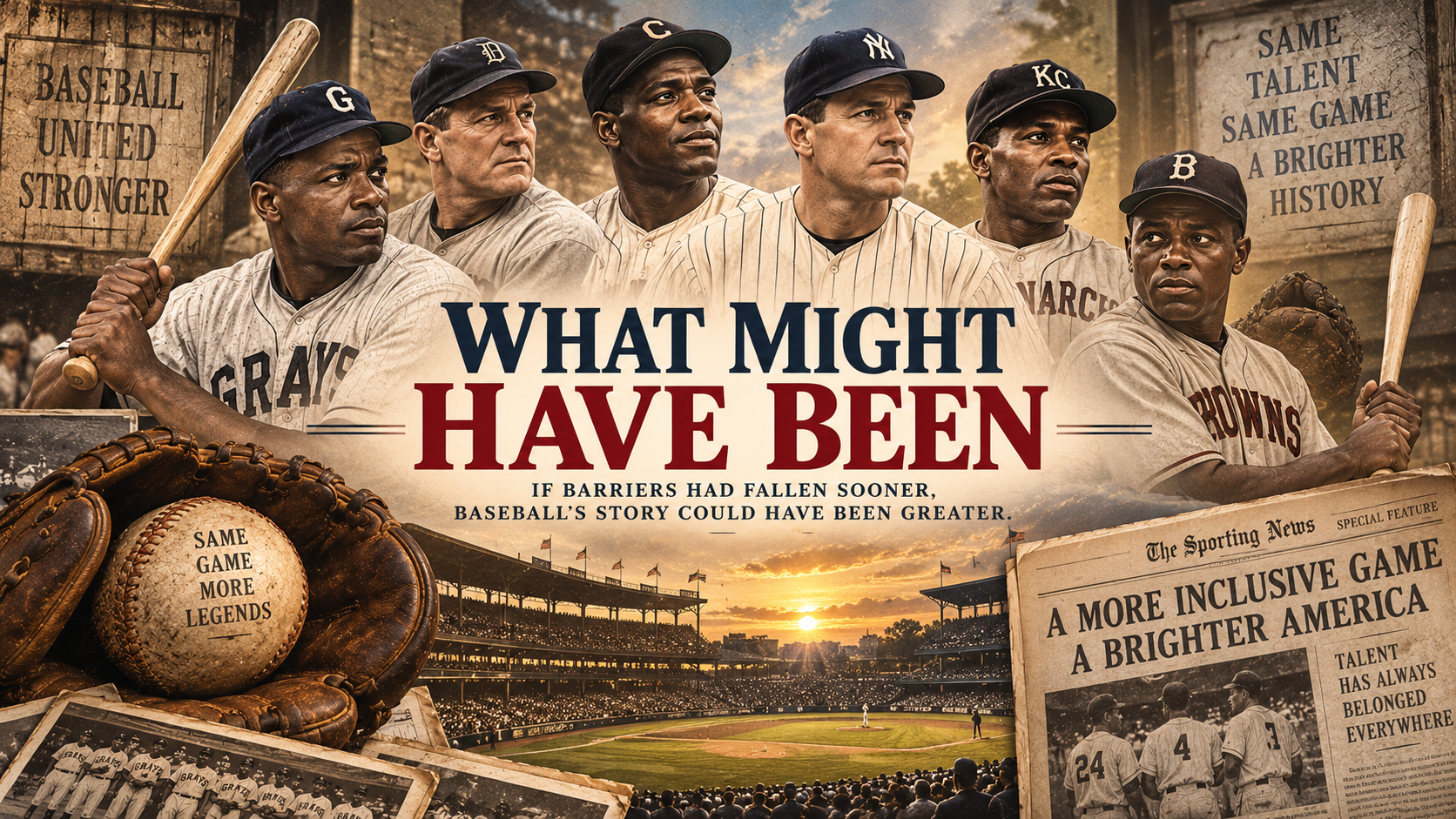
No computer simulation can tell us exactly what would have happened if Major League Baseball had been integrated decades earlier. There are simply too many things that cannot be recreated—the ballparks, managers, teammates, injuries, travel, opportunities and pressures that would have shaped each player's career. These replays are not an attempt to rewrite baseball history or to claim that the numbers they produced are the numbers these players certainly would have achieved.
What they can do is give us another way to think about a question baseball history left unanswered.
When Negro League players were evaluated season by season, based on what they actually accomplished and adjusted for the quality of competition they faced, the best of them repeatedly found themselves alongside the greatest Major League players of their time. Oscar Charleston could stand beside Ty Cobb and Tris Speaker. Josh Gibson could be compared with Babe Ruth, Lou Gehrig and Jimmie Foxx. Buck Leonard could share a leaderboard with Ted Williams and Rogers Hornsby. Satchel Paige and the great Negro League pitchers could compete with the best Major League pitchers of their generations.
Not every Negro League player became a star in these replays—and that may be one of the most important results of the entire project. Some became superstars. Some became everyday Major League players. Some became pitchers, utility players and reserves. Others struggled. In other words, they became what we would expect from any large group of professional baseball players given the opportunity to compete for Major League jobs.
But they were never given that opportunity.
That may be the saddest part of looking through these simulated seasons. We know what Babe Ruth did against the pitchers he actually faced. We know what Ty Cobb, Rogers Hornsby, Lou Gehrig, Walter Johnson and Lefty Grove accomplished against the competition Major League Baseball allowed them to face. What we will never know is what those same seasons would have looked like with Oscar Charleston in center field, John Henry Lloyd at shortstop, Josh Gibson behind the plate, or Satchel Paige standing on a Major League mound.
Perhaps some records would have changed. Perhaps some pennants would have belonged to different teams. Some Major League stars might have lost starting jobs, while others might have been even greater than we remember. Negro League stars might have won batting titles, home run crowns, MVP awards and World Series championships—or experienced the same slumps, injuries and disappointments as everyone else.
We can simulate those possibilities, but we can never recover the seasons that were lost.
And that is ultimately what this project has come to mean to me. It began as an attempt to create realistic Negro League players for a baseball simulation. It ended up becoming an exploration of a much larger question: How different might the history of baseball have been if the best players had always been allowed to compete against one another?
After replaying these seasons, I don't think the most interesting question is whether Josh Gibson would have hit 500 home runs, whether Oscar Charleston would have won a batting title, or how many games Satchel Paige might have won.
The question I keep coming back to is much simpler: