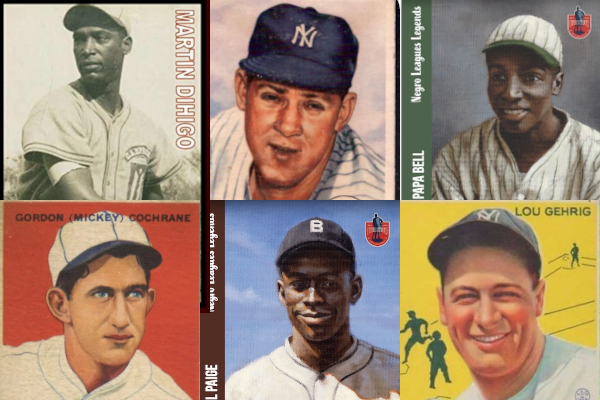
Here is an alphabetical sorted list of teams.
1929 Baltimore Black Sox went 49-21 in the Negro American League lead by slugging infielders Dick Lundy, and Jud Wilson with Rap Dixon covering center field. On the hill they had Laymon Yokley, Willis Flournoy who won 28 games together.
The second Negro League Club to come out of Baltimore is the 1941 Elite Giants. The club was 60-26 on the season leading the Negro National League by 2.5 games over the Homestead Grays. They were anchored by a talented young 19 year old catcher Roy Campanella. They had a strong outfield with Bill Hoskins, Henry Spearman and Goose Curry in right. Starting rotation included Bill Byrd, Roy K. Williams and Emery Adams.
The 1944 Birmingham Black Barons finished 71-42 on top of the Negro American League. Led by shortstop Artie Wilson and fellow infielders Tommy Sampson and John Britton. Ed Steele bated third in the lineup he led the club in batting, and homers on the season.
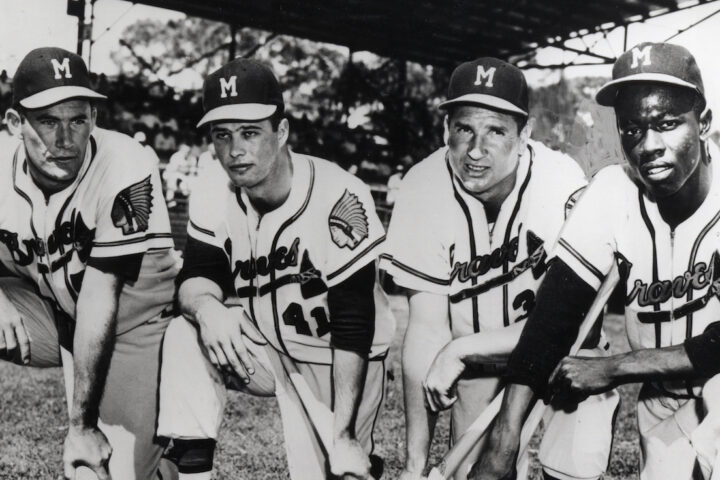
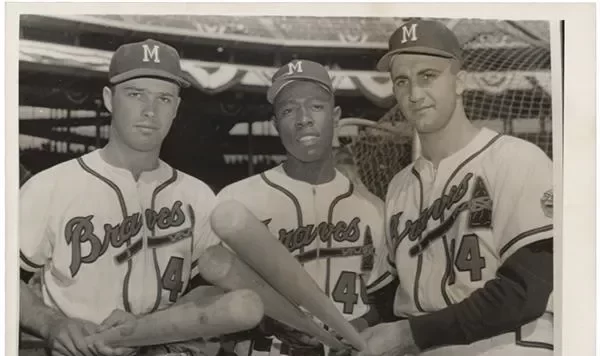
Our first MLB club is the 1915 Boston Braves. The Braves swept the Philadelphia Athletics in the world series after finishing 10.5 games ahead of the New York Giants capturing the pennant. The club was led by stellar pitching from Dick Rudolph and Bill James who both won 26 games on the season.
The second club from Boston is the 1949 Ted Williams led Red Sox. The club won 96 games led by starters Mel Parnell and Ellis Kinder, 25 and 23 wins respectiely. Ted Williams led most batting categories on the season, 43 homers, 159 RBI, with a .343/.490/.650 batting line. Other offensive contributors include, Bobby Doerr, Bill Goodman and Dom DiMaggio.
The first of two Brooklyn Dodgers club is the 1942 team. The club finished second to the Cardinals in the NL winning 104 contests. They were led by a strong outfield trio, Joe Medwick, Pete Reiser and Dixie Walker. Whit Wyatt, Kirby Higbe and Curt Davis led their starting rotation.
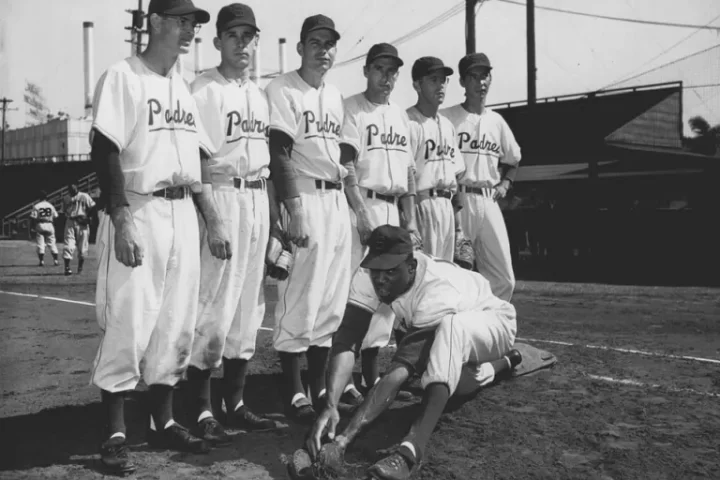
The second Dodger club is the 1953 bunch. They won 105 games on the season led by Carl Furillo, Jackie Robinson and Duke Snider in the outfield. They also had Gil Hodges and Roy Campanella providing more power to their lineup. Snider led the league in OPS, SLG and Runs.
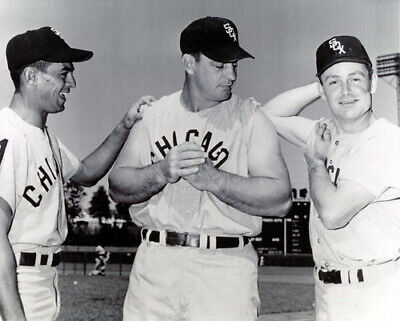
The windy city provides the next four clubs to our list. The first being the 1917 Chicago White Sox. I know we dipped below 1920 for this one. The White Sox defeated the New York Giants in the world series after winning 100 games on the season. Led by starting pitchers Eddie Cicotte, Red Faber, Lefty Williams and Reb Russell.
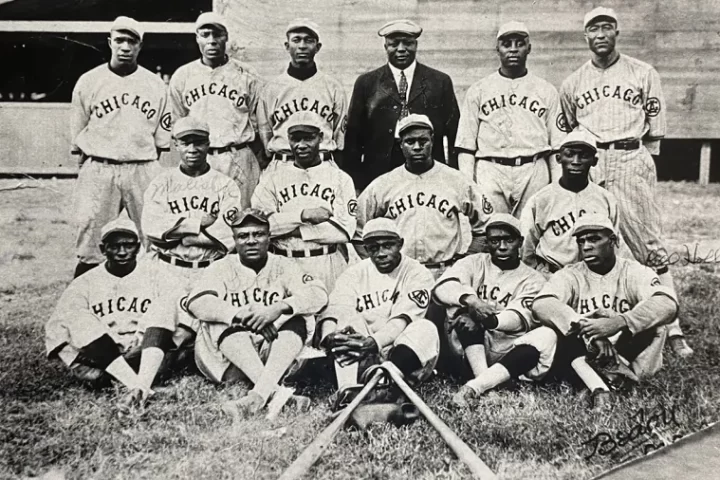
We turn back to the Negro National League for our next two clubs from Chicago. The first is the American Giants of 1920. In the inaugural season of the Negro National League the American Giants held a 43-17 record finishing 7.5 games ahead of the Kansas City Monarchs. They were led Cuban star Cristobal Torriente who batted .393 on the season. Their lineup also included a speedy .300 hitting second baseman Bingo DeMoss and a .320 hitting catcher, George Dixon. Their starting pitching rotation includes; Dave Brown, Tom Williams and Tom Johnson all of who held a sub 2.00 era on the season.
Another American Giant club, our next club is from 1926. In typical Negro League fashion the club has a totally different list of stars compared to the 1920 club. The pitching staff had Bill Foster (1.80 era), Rub Curry and Webster McDonald. In the field they have Jelly Gardner, George Sweatt and Sandy Thompson in the outfield.
Back to the MLB for one more Chicago club, the Cubs of 1935. The Cubs lost to the Detroit Tigers in the world series but won 100 games on the season. Their batting lineup is full of .300 hitters, catcher Gabby Hartnett, second baseman Billy Herman, third baseman Stan Hack, and outfielders Augie Galan and Frank Demaree. On the hill they are led by Lon Warneke, Bill Lee and Larry French. Two 20 game winners and one 17 game winner.
We dip once more below 1920 to the 1919 Cincinnati Reds. A club who doesn't get much respect since the whole Black Sox scandal thing. The club won 96 games and finished 9 games ahead of the Giants in the NL. In an era where pitching is king the Reds didn't disappoint with one 21 and two 19 game winners, Sam Sallee, Hod Eller and Dutch Ruether. They also had two Cuban stars Dolf Luque 10-3 and Manuel Cueto a backup outfielder. Edd Roush, their Center fielder lead the league in batting.
Our next club the 1920 Cleveland Indians winners of the MLB world series is loaded with talent. A pitching staff with two 20 and one 30 game winners. Stan Coveleski, Ray Caldwell and Jim Bagby. Six .300 plus hitters in the lineup. Catcher Steve O'Neill, short stop Ray Chapman, third baseman Larry Gardner, outfielders Elmer Smith, Charlie Jamieson and Tris Speaker.
In the later seasons of the Negro Leagues several clubs would field multiple players who later become MLB stars. Our next club the 1945 Cleveland Buckeyes had Sam Jethroe, who played four major league seasons mainly for the Boston Braves. He and Willie Grace a .323 hitter roamed the Buckeye outfield. The infield was anchored by Cuban born short stop Avelino Canizares who batted .370 in 1945. Avelino only played one year in the Negro Leagues most of the time he could have been seen fielding grounders in the Mexican League.
Two clubs represent Detroit the 1932 Wolves of the Negro League and the 1935 Tigers of the AL. The Wolves were the number one club in the East-West League 3.5 games ahead of the Homestead Grays. Their starting lineup consists of some of the best black players in the early 1930s. Led by Quincy Trouppe at first, Tom Young behind the plate, Willie Wells at short, Cool Papa Bell in center and Mule Suttles in left. On the hill they had a young Ray Brown, Bert Hunter, Ted Trent in his prime and a seasoned William Bell. They also had a couple of old timers to round out the staff; Lefty Williams, Dizzy Dismukes and 'Smoky' Joe Williams. Note: 5 of their starters; Tom Young, Mule Suttles, Dewey Creacy, Willie Wells and 'Cool Papa' Bell were team mates years later on the 1931 St. Louis Stars club.
Our second club hailing from the motor city is the 1935 Tigers. Winners of the American league pennant with hitters Hank Greenberg, Charlie Gehringer, Mickey Cochrane Goose Goslin and Pete Fox. Their real strength may have been their pitching staff led by Tommy Bridges, Schoolboy Rowe, General Crowder and Elden Auker.
Were now halfway done with our list. The next five clubs come from the Negro Leagues, specifically from Homestead and Kansas City with one club, our next from Hilldale, Darby Pennsylvania. They were know as the Darby Daises, who won the Eastern Colored League pennants in 1923, 1924 and 1925. This club is from 1925. One note here they are not the only club from Pennsylvania in 1925 in our list there is also the Pirates who we will cover later. The Hilldale Club had excellent starting pitchers, Nip Winters, Rube Curry (who was also on the Chicago American Giants in 1920) and Phil Cockrell. At the plate they had six plus .300 hitters, catcher Biz Mackey, first base George Car, at third Judy Johnson and all three outfielders, Clint Thomas, George Johnson and Otto Briggs.
The next two clubs are from Homestead a town 6 miles east southeast of Pittsburgh PA. The first is the 1937 Homestead Grays club. The Grays won over 70% of their 1937 contests. They were led by a .400 plus hitting catcher, Josh Gibson who also belted 20 homers in 39 games. Josh wasn't the only slugger on the club though they also had Buck Leonard who hit .376 with 13 homers while playing 42 games at first base. Their outfield was also stacked with three plus .300 hitters Vic Harris, Jerry Benjamin and Jim Williams. On the hill they had their ace Ray Brown, Louis Dula, Edsall Walker and Tom Parker.
Our second installation out of Homestead is the 1943 club. This club might even have more fire power than the 1937 club. While still fielding most of the '37 club they add James “Cool Papa” Bell and Howard Easterling to lineup. In the bullpen they add pitchers Spoon Carter and Johnny Wright with 14-2 and 18-3 records.
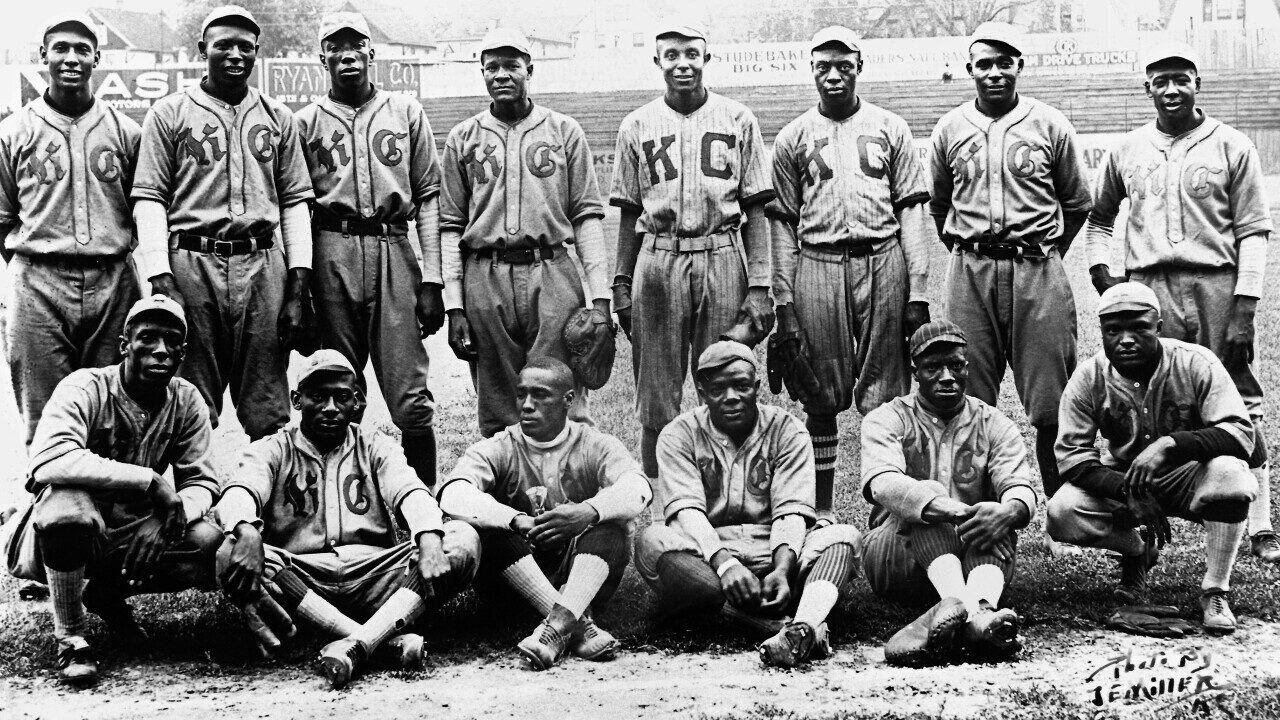
The next two clubs come from Kansas City where the Monarchs who reigned for over 28 seasons in the Negro League. For our first Monarch club we go back to 1924 where the Monarchs defeated the Hilldale club in the 4th Negro League World Series. The club has several big bats, Newt Joseph at .375, Dobie Moore at .355, Heavy Johnson .366, Hurley McNair at .339 and two way star Joe “Bullet” Rogan who was 16-5 on the hill while batting an absurd .396. Bill Drake and William Bell also joined him in the starting rotation with Jose Mendez in the bullpen.
Fast forward some 18 seasons and we have the 1942 installation of the Monarchs who are once again on top the Negro Leagues as they swept the Homestead Grays in the Negro World Series. As mentioned before some players in the later years in the Negro Leagues spent some time in the majors. Willard Brown, Satchel Paige are on this Monarchs club. Willard had a brief stint in the majors but spent most of his best years where on the Monarchs, 1942 is one such season batting .379. Team mates Bonnie Serrell and Ted Strong joined the club with plus .300 batting averages. The pitching staff included Hilton Smith, Satchel Paige, Connie Johnson and Jack Matchett.
We are now at the point where we will list six clubs from New York. There are thee Yankee clubs, 27, 32 and 39. One New York Giant club 1922 and two Negro League clubs the 1930 Lincoln Giants and lastly the 1947 Cubans. We will start with the Giants of 1922 who defeated the New York Yankees 4-0-1 in the World Series, yes game two ended in a tie after 10 innings. This club had 7 of the 8 batters hit over .300 with Casey Stengel on top at .368. Their pitching staff was led by Art Nehf, Jesse Barnes and Phil Douglas with Rosy Ryan in the bullpen.
The next New York team is the 1927 Yankees with the “Murders Row” lineup of Earl Combs, Tony Lazzeri, Babe Ruth, Lou Gehrig and Mark Keonig. Their batting averages may not have been as high as the Giants of '22 but their power was legendary with Ruth at belting 60 and Gehrig at adding another 47 homers. Their pitching staff wasn't too shabby either led by Waite Hoyt with 22 wins. Only one starting pitcher had a winning percentage under 70%.
Our next New York club is the Independent club of the Negro League the 1930 Lincoln Giants. They won almost 75% of their contests and finished 1 game behind the Homestead Grays. Seven of their eight batters finished with a plus .300 batting average. Led by Charlie “Chino” Smith at .417, who also led the club with 8 homers in 56 contests. On the hill they had Bill Holland starting 18 games winning 14 and Luther Farrell going 7-1.
Five years post the 1927 Yankees club their 1932 team won 107 games and swept the Chicago Cubs in the World Series. Led again by Ruth and Gehrig they now have Bill Dickey behind the plate, Lefty Gomez, Red Ruffing, George Pipgras and Johnny Allen on the mound.
One more Yankee club, the 1939 team, which maybe their best yet. This years' starters include Bump Hadley, Atley Donald and Monte Pearson with Steve Bondra in the bullpen. At the plate there are several new younger faces, Joe DiMaggio, Charlie Keller, Joe Gordon join Bill Dickey. Now the lineup is more rounded with half of the hitters belting more than 20 homers led by DiMaggio at 30.
The last New York club on the list is the 1947 Cubans. The same year Jackie Robinson broke the color barrier in the majors. The Cubans were tops in the NNL led by Minnie Minoso at third, Silvio Garcia at short and Claro Duany in right. Starting pitching included Luis Tiant Sr. who was 9-0.
Staying in the late 1940s there is the 1946 Newark Eagles of the Negro League. This club has several future MLB stars with Larry Doby at second base and Monte Irvin in center. They also have several other plus .300 hitters, Lennie pearson at first, Pat Patterson at third, Johnny Davis in left. Their pitching staff was led by Leon Day and Max Manning who won 24 games with Rufus Lewis picking another 8.
Moving on to Philadelphia next there are two clubs one from each major league, the 1931 Athletics and the 1950 Phillies. First up is the Athletics who lost the World Series to the Cardinals 4 games to 3. On the season the Athletics won 107 games with hurlers Lefty Grove 31 wins, George Earnshaw 21 and Rube Walberg with 20. The lineup was loaded with talent, Jimmie Foxx 30 homers, Mickey Cochrane batted .349, Al Simmons .390.
The Phillies of 1950 were tops in the NL although they were swept by the Yanks in the series they fielded a pretty potent club. Robin Roberts led the pitching staff winning 20 games, Curt Simmons was 17-8, and closer Jim Konstanty was 16-7 with 22 saves. From the plate there was Del Ennis with 31 dingers, Willie Jones with 25 and catcher Andy Seminick with 24.
As mentioned before there are more than one club coming out of the Pittsburgh from 1925. The Pirates defeated a tough Washington Senators club in the World Series 4 games to 3. Their lineup consists of 7 .300 plus batters led by outfielders Kiki Cuyler, Max Carey and Clyde Barnhart. On the mound the had a balanced attack with Lee Meadows, Ray Kremer, Vic Aldridge, Johnny Morrison, and Emil Yde. All pitchers won between 15 and 20 games.
We turn to St. Louis for the next four clubs, two Cardinal clubs, one Negro League club the Stars and our next club the 1922 St. Louis Browns. They might not have made it to the World Series but they have a star studded club. Their starting pitchers led by Urban Shocker 24 wins, Elam Vangilder 19 and Ray Kolp with 14 wins. The lineup included six plus .300 hitters with George Sisler who lead the majors with an amazing .420 average. Team mate Ken Williams led the majors with 39 homers.
The next club, the final Negro League team is the 1931 St. Louis Stars. The club is led by a strong batting lineup including Willie Wells, Mule Suttles, 'Cool Papa' Bell, New Allen and catcher Tom Young. Their pitching staff of Joe Strong, Ted Trent and Bert Hunter.
The last two St. Louis clubs are both Cardinals the 1942 club and our next club the 1931 version. Their ace pitching staff anchored by Paul Derringer 18-8, supported by Bill Hallahan 19-9 and Burleigh Grimes at 17-9. Like most clubs on our list the batting lineup in studded with .300 hitters; center fielder Chick Haffey, first baseman Jim Bottomley, second baseman Frankie Frisch and outfielder Pepper Martin.
The 1942 St. Louis Cardinals may be one of the most balanced clubs on our list. They defeated the Yankees 4 games to 1 in the World Series and won 106 games on the season. Their batting lineup included Stan Musial, Enos Slaughter, Walker Cooper and Whitey Kurowski. On the mound they had two 20 game winners Mort Cooper and Johnny Beazley.
We finally come to an end of our list with the 1933 Washington Nationals. Although they lost in the World Series to the New York Giants they still make our top 32 team list. Like the rest of our clubs they have top notch pitching staff led by General Crowder 24 wins, Earl Whitehall 22, and Lefty Stewart with 15. In the pen they have Jack Russell 12-6 and 2.69 era. Their lineup is anchored by Heine Manush .336 batting average with a league leading 17 triples. Joe Cronin is at short with a top 45 doubles and Joe Kuhel is a first batting .322.
The fivethirtyeight website lists the top teams of our list in the following order;
- 1939 Yankees
- 1927 Yankees
- 1932 Yankees
- 1942 Cardinals
- 1931 Athletics
- 1953 Dodgers
- 1935 Tigers
- 1942 Dodgers
- 1919 Reds
- 1935 Cubs
- 1917 White Sox
- 1949 Red Sox
- 1933 Nationals
- 1931 Cardinals
- 1922 Giants
- 1920 Indians
- 1925 Pirates
- 1950 Phillies
- 1922 Browns
- 1914 Braves
We are not sure how they will actually rank at the end of our season. Adding in 16 Negro League clubs should make things interesting. We will try to make note of some key Negro League clubs vs MLB club match ups.